
The Organization System That Made Grocery Shopping So Much Easier
Every week at The Life Experience Collective, we encourage the practice of a Sunday Reset—a dedicated time to evaluate the systems, routines, and environments that shape everyday life. Rather than waiting for small inconveniences to become ongoing frustrations, the Sunday Reset creates space to identify what's working, recognize what's creating unnecessary friction, and make thoughtful adjustments before a new week begins. It's often within these moments of reflection that the simplest, yet most impactful, opportunities for improvement are uncovered.
During a recent Sunday Reset, our Founder & CEO, Kyndra, set out to complete what seemed like a routine task: planning the week's meals. Instead, the process revealed something much more significant. The challenge wasn't deciding what to cook or creating a grocery list—it was recognizing that the kitchen organization system no longer supported the way her family actually prepared meals.
The lesson became clear.
The problem wasn't meal planning.
The problem was the system behind it.
The Problem
One of the simplest ways to reduce the mental load of meal planning is to build consistency into the weekly menu. Rather than creating an entirely new meal plan each week, many households naturally rotate through a core collection of favorite meals. Establishing themed dinner nights not only reduces decision fatigue, but also creates greater predictability when grocery shopping, meal prepping, and managing a household budget.
Several months ago, our Founder & CEO, Kyndra, implemented this approach by organizing her family's weekly dinners around three consistent meal themes: American, Mexican, and Italian. The change immediately simplified meal planning, reduced food waste, and made grocery shopping more intentional because many of the same staple ingredients were used from week to week. The meal planning system itself was working exactly as intended.
However, during a recent Sunday Reset, a different challenge became apparent.
While the meal planning system had evolved, the kitchen organization system had not.
As Kyndra began preparing the family's weekly grocery list, what should have been a simple inventory check became an unnecessarily time-consuming process. Pantry shelves, refrigerator drawers, and the freezer all had to be searched to determine what ingredients were already available. Taco shells were stored beside baking supplies, pasta was grouped with miscellaneous pantry items, shredded Mexican cheese was separated from salsa and tortillas, and frozen meatballs intended for Italian night had disappeared behind other freezer items. Although every ingredient technically had a place, those locations reflected where food fit—not how meals were actually prepared.
As a result, a task that should have taken only a few minutes stretched into nearly half an hour of searching, verifying, and second-guessing what needed to be purchased.
That experience revealed an important distinction.
The issue wasn't inventory.
The issue was organization.
More specifically, the kitchen had been organized according to grocery categories rather than the family's actual cooking habits. The organization system supported the way food was purchased, but not the way it was used. That small disconnect created unnecessary friction every single week, turning a straightforward grocery planning session into a repetitive and frustrating process.
Like many of the insights uncovered during a Sunday Reset, the solution wasn't to work harder—it was to design a better system.
The Solution
One of the most effective organization principles is to design systems around behavior rather than categories. While grocery stores organize food by product type, most households don't prepare meals that way. We cook recipes, not aisles. When our organization systems fail to reflect our daily routines, even simple tasks like grocery shopping and meal preparation become more time-consuming than they need to be.
During this week's Sunday Reset, our Founder & CEO, Kyndra, decided to redesign her kitchen around the way her family actually eats rather than the way groceries are purchased. Instead of organizing food according to pantry categories, dedicated meal zones were created throughout the pantry, refrigerator, and freezer for the family's three recurring dinner themes: American, Mexican, and Italian.
Each zone now contains the ingredients most frequently used for that style of meal. The Mexican section houses taco shells, tortillas, salsa, taco seasoning, black beans, enchilada sauce, shredded cheeses, and other pantry and refrigerated staples used throughout the week. The Italian section keeps pasta, marinara sauce, parmesan cheese, breadcrumbs, garlic bread, frozen meatballs, and Italian seasonings together in one easily accessible area. The American section includes barbecue sauces, stuffing, canned vegetables, mashed potato ingredients, gravies, and the proteins commonly used for those meals.
This simple shift transformed the kitchen into a functional inventory system.
Instead of searching every cabinet, refrigerator shelf, and freezer drawer before grocery shopping, each meal zone can now be evaluated individually. If the Mexican section is running low on tortillas or taco seasoning, those items are immediately added to the grocery list. If only one box of pasta remains in the Italian section, it's clear that it needs to be replenished. Rather than relying on memory or conducting a full kitchen search each week, the organization system provides a visual snapshot of what is available and what needs to be replaced.
The result is a grocery planning process that is faster, more accurate, and significantly less overwhelming.
More importantly, the kitchen now supports the family's established routines instead of creating unnecessary friction. By organizing the space around how meals are actually prepared, everyday tasks require less effort, decisions become easier to make, and the system naturally reinforces the habits it was designed to support.
This week's Sunday Reset served as a reminder that the most effective organization systems aren't built around where things fit—they're built around how we live.
Amazon Favorites That Made This System Work
At Little Luxuries, we believe the right products should support a well-designed system—not become the system themselves. Containers alone don't create organization; thoughtful organization creates sustainable routines. Once the decision was made to organize the kitchen around the way meals are actually prepared, the next step was selecting storage solutions that would reinforce that approach while remaining practical enough to maintain from week to week.
During this week's Sunday Reset, our Founder & CEO, Kyndra, intentionally selected products that would establish clearly defined meal zones throughout the pantry and refrigerator. The goal wasn't to create a picture-perfect pantry for display—it was to build a functional system that makes grocery shopping, meal planning, ingredient storage, and weeknight cooking simpler, faster, and more efficient. Each product below plays a specific role in reducing visual clutter, improving accessibility, and making the organization system easy to maintain over time.
Hyacinth Storage Baskets
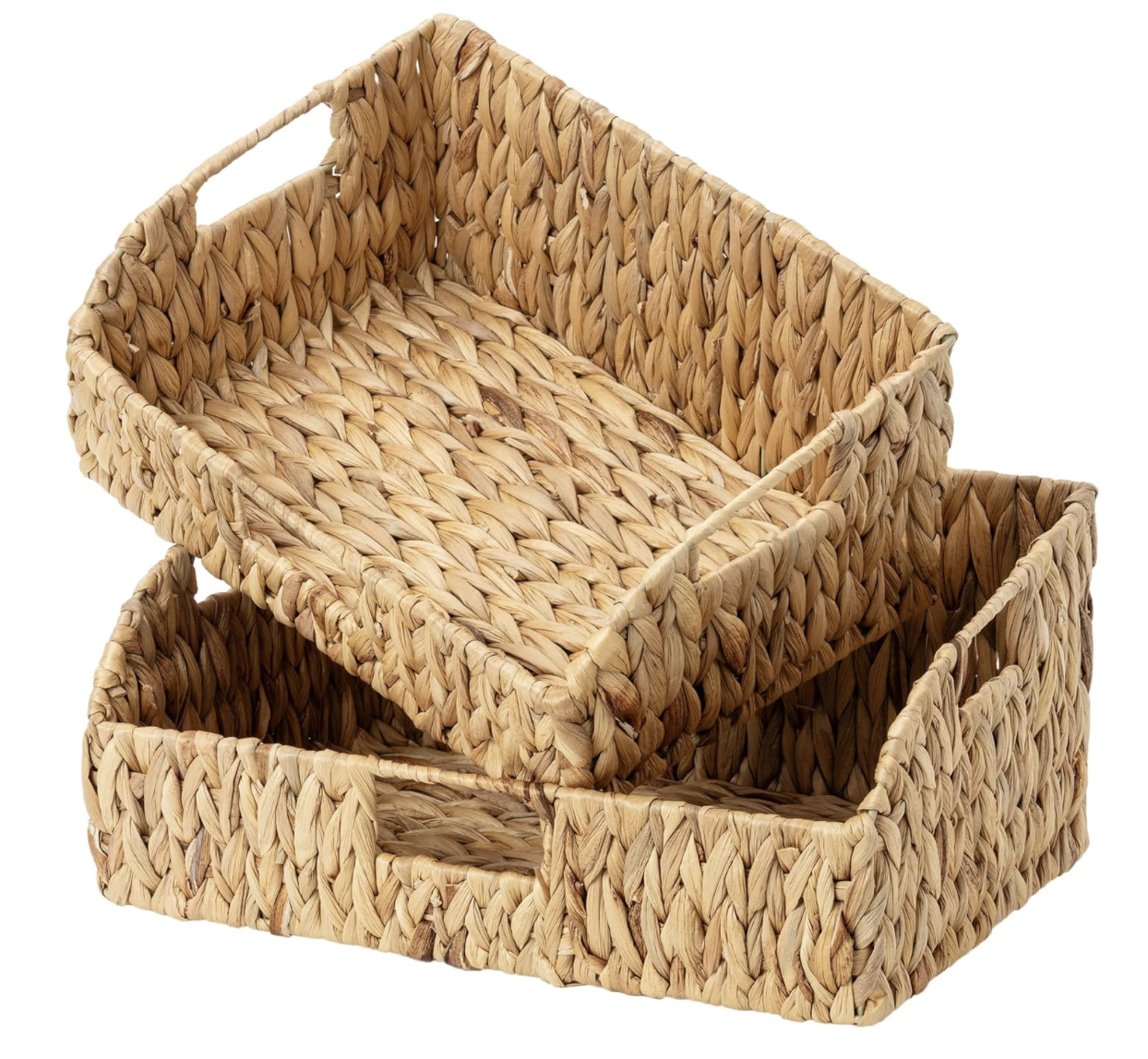
The foundation of this pantry organization system is a set of woven hyacinth storage baskets. While they certainly add warmth and texture to open pantry shelving, their greatest value is functional rather than decorative. By containing similar ingredients within designated baskets, they eliminate visual clutter and create clearly defined meal zones that support the family's weekly routines.
Click to Buy: Hyacinth Storage Baskets
Rather than storing individual food packages throughout the pantry, our Founder & CEO, Kyndra, dedicated separate baskets to the family's American, Mexican, and Italian dinner themes. Each basket contains the pantry staples most frequently used for that style of meal, making it easy to locate ingredients, return items to their proper place, and quickly assess inventory during the weekly Sunday Reset. Instead of searching multiple shelves before grocery shopping, each basket can simply be removed, reviewed, and restocked as needed.
This simple solution transforms pantry organization from a collection of individual products into a system that reflects how the kitchen is actually used—making grocery planning more efficient and helping ensure that every ingredient has a logical place to belong.
Metal Non-Slip Basket Labels
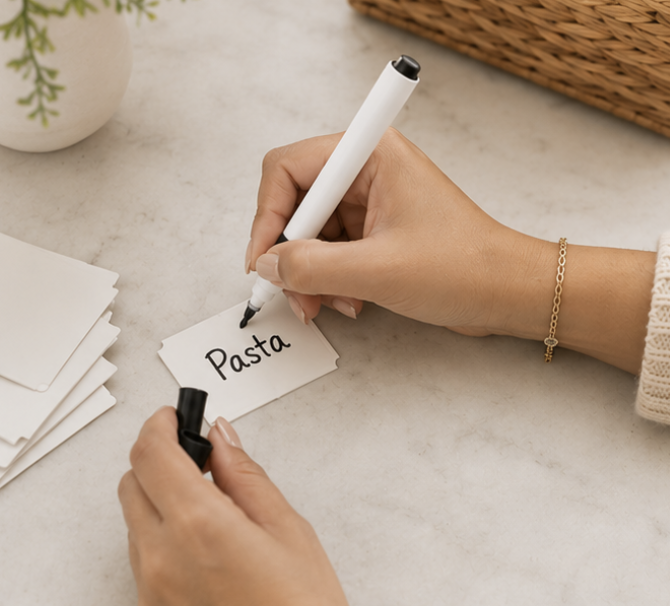
The effectiveness of any organization system depends on how easy it is to maintain. Clear labeling eliminates guesswork, reinforces established routines, and ensures that every item has an obvious place to return after grocery shopping or meal preparation. When a system is intuitive, it requires less effort to keep organized over time.
Click to Buy: Metal Non-Slip Basket Labels
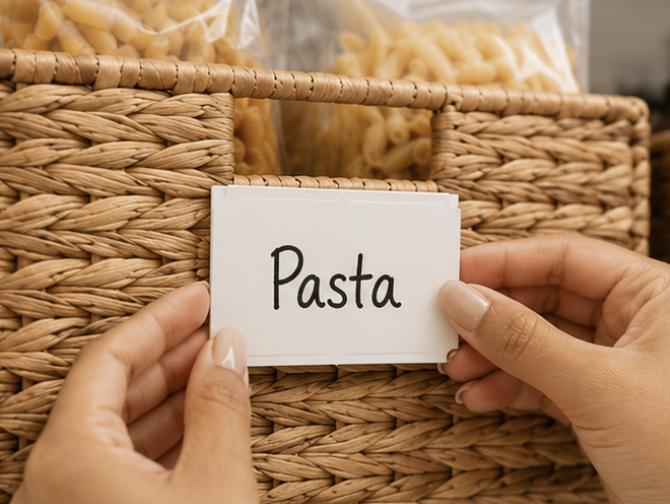
To strengthen this organization system, our Founder & CEO, Kyndra, added metal non-slip basket labels to the front of each hyacinth storage basket, clearly identifying the designated meal zones for American, Mexican, and Italian dinner nights. Rather than relying on memory, each basket is immediately recognizable, making it easy for every member of the household to locate ingredients and return them to their proper place.
Click to Buy: Metal Non-Slip Basket Labels
Beyond improving functionality, the labels create a polished, cohesive appearance that complements the overall pantry design. While seemingly a small addition, this simple organizational detail reinforces the system with every use, transforming pantry maintenance from an ongoing chore into a routine that feels almost effortless. It's a reminder that the most effective organization systems aren't just easy to create—they're easy to sustain.
Clear Storage Bins with Lids for the Refrigerator
Click to Buy: Large Plastic Containers for Pantry Organization and Storage
While the pantry organization created a strong foundation, the refrigerator became the area where this system made the greatest impact. Refrigerated ingredients are often used more frequently, replenished more often, and stored across multiple shelves and drawers, making them one of the easiest areas for clutter and inefficiency to develop. Without intentional organization, gathering ingredients for a single meal can quickly become a process of searching throughout the entire refrigerator.
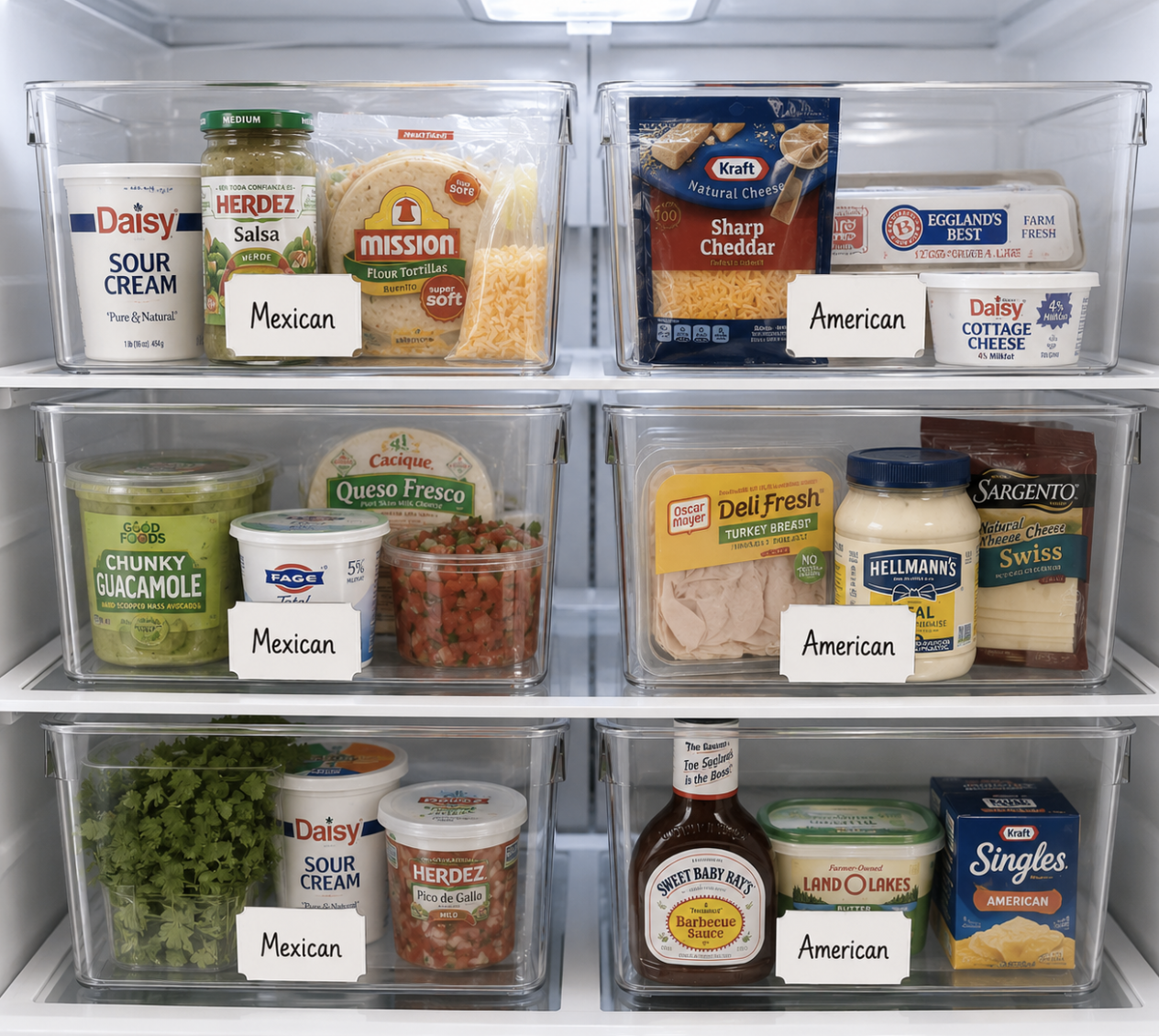
To solve this challenge, our Founder & CEO, Kyndra, incorporated clear storage bins with lids to establish dedicated refrigerator zones for each of the family's recurring dinner themes. Mexican meal essentials—including tortillas, shredded cheese, salsa, sour cream, and fresh toppings—are stored together in one designated bin. Italian ingredients such as parmesan cheese, mozzarella, pasta sauces, pepperoni, and other staples occupy their own zone, while ingredients used for American-style meals are grouped together in a separate container.
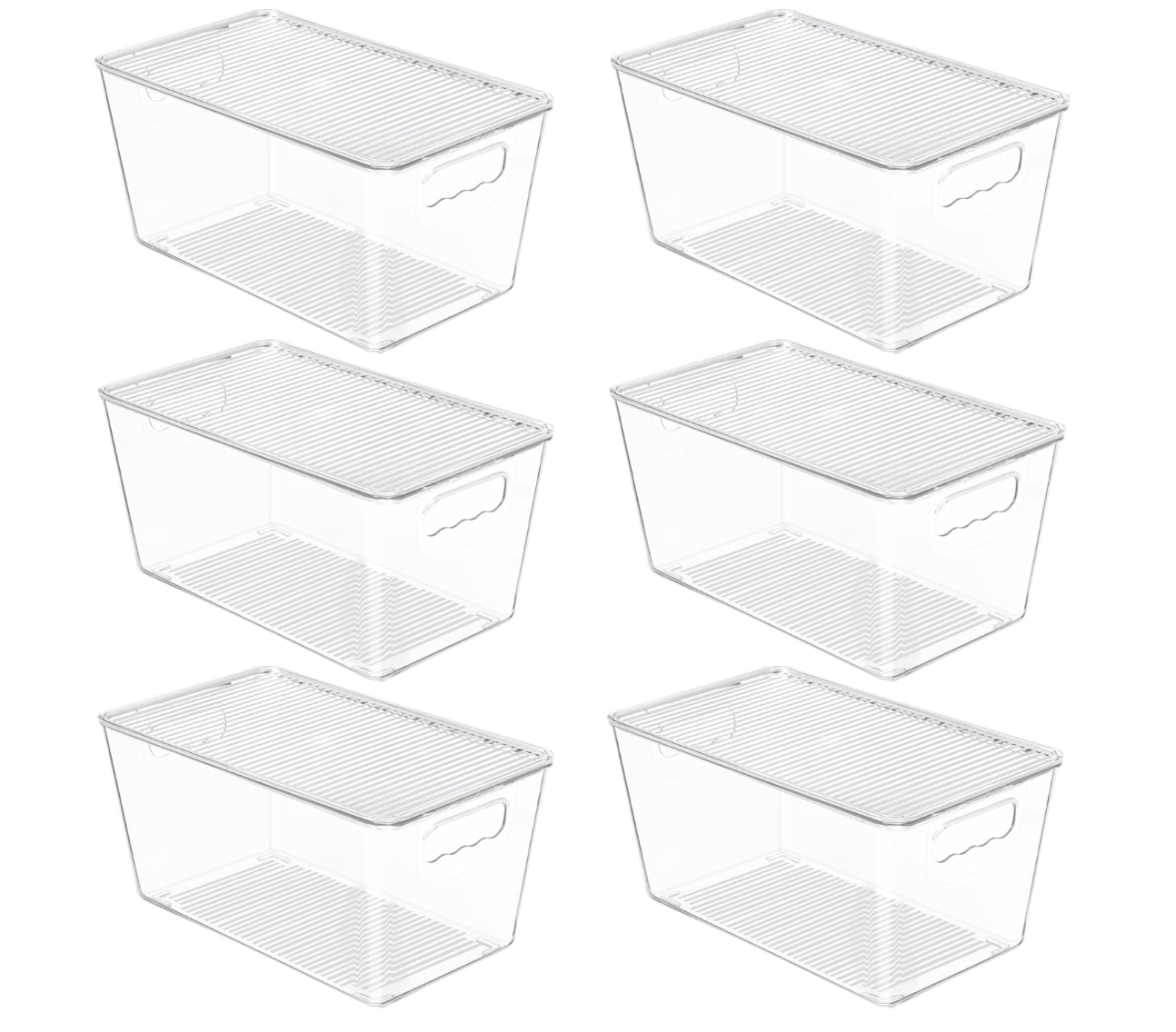
Click to Buy: Medium Plastic Containers with Handle for Pantry Organizer and Storage
The transparent design allows inventory to be assessed at a glance without removing multiple items or rearranging shelves, making it easy to identify what needs to be replenished during the weekly Sunday Reset. The lids also provide additional functionality by allowing the bins to be safely stacked, maximizing refrigerator space while maintaining a clean, organized appearance.
More importantly, these bins transform the refrigerator into an extension of the overall kitchen organization system. Instead of searching for individual ingredients scattered throughout the refrigerator, each meal category has a clearly defined home. The result is a space that supports faster meal preparation, more efficient grocery planning, and a weekly routine that feels significantly less overwhelming.
After implementing a meal-based organization system, three simple products transformed the way our pantry, refrigerator, and freezer function together. Instead of searching through shelves for ingredients or trying to remember what we already have at home, each meal category now has a designated space that supports the way our family actually cooks.
The result is a kitchen that feels easier to maintain, grocery planning that requires less mental energy, and a system that helps everyday routines flow more naturally.
Clear, Airtight Glass Storage Jars
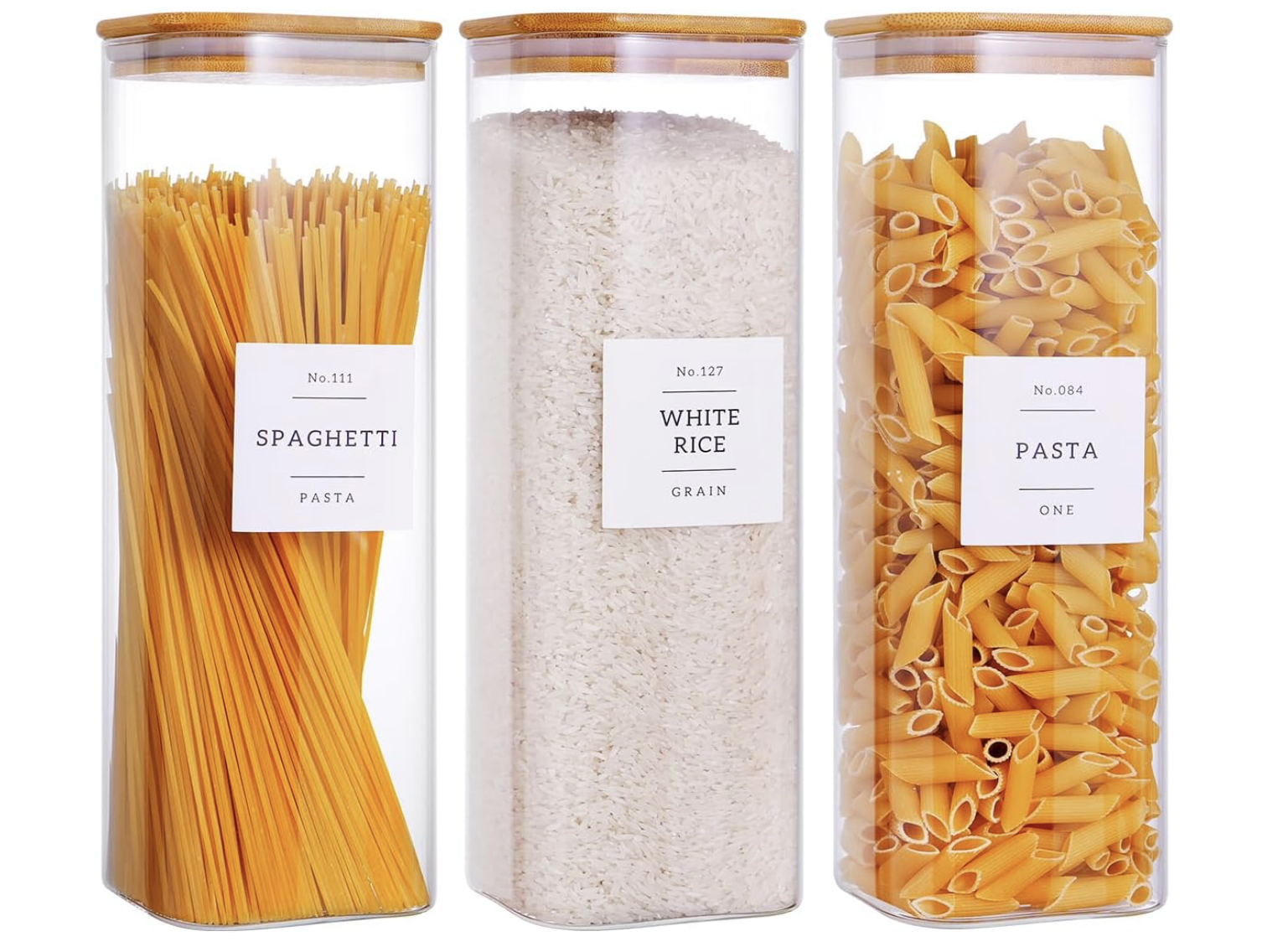
Click to Buy: Square Kitchen Storage Jars with Airtight Bamboo Lids
One of the final pieces that brought this pantry system together was replacing bulky, partially opened packaging with clear, airtight glass storage jars. Dry goods like pasta, rice, flour, sugar, oats, breadcrumbs, and baking ingredients often come in boxes and bags that are difficult to stack, prone to spills, and make it nearly impossible to quickly see how much is left. While the packaging is designed for transportation, it isn't designed to support everyday use.
Transferring frequently used ingredients into matching glass containers created a pantry that is not only more visually cohesive, but significantly more functional. Because every ingredient is visible at a glance, it's easier to monitor inventory before grocery shopping, avoid purchasing duplicates, and recognize when staples need to be restocked. The airtight seal also helps preserve freshness, allowing ingredients to last longer while reducing unnecessary food waste.
More importantly, these jars create consistency. Instead of navigating dozens of differently shaped boxes and bags, the pantry becomes a space where everything has a predictable home. That consistency reduces visual clutter, simplifies meal preparation, and makes maintaining the system much easier over time. It's a small change that quietly removes friction from one of the most frequently used spaces in the home.
A Magnetic Weekly Menu That Connects the Entire System
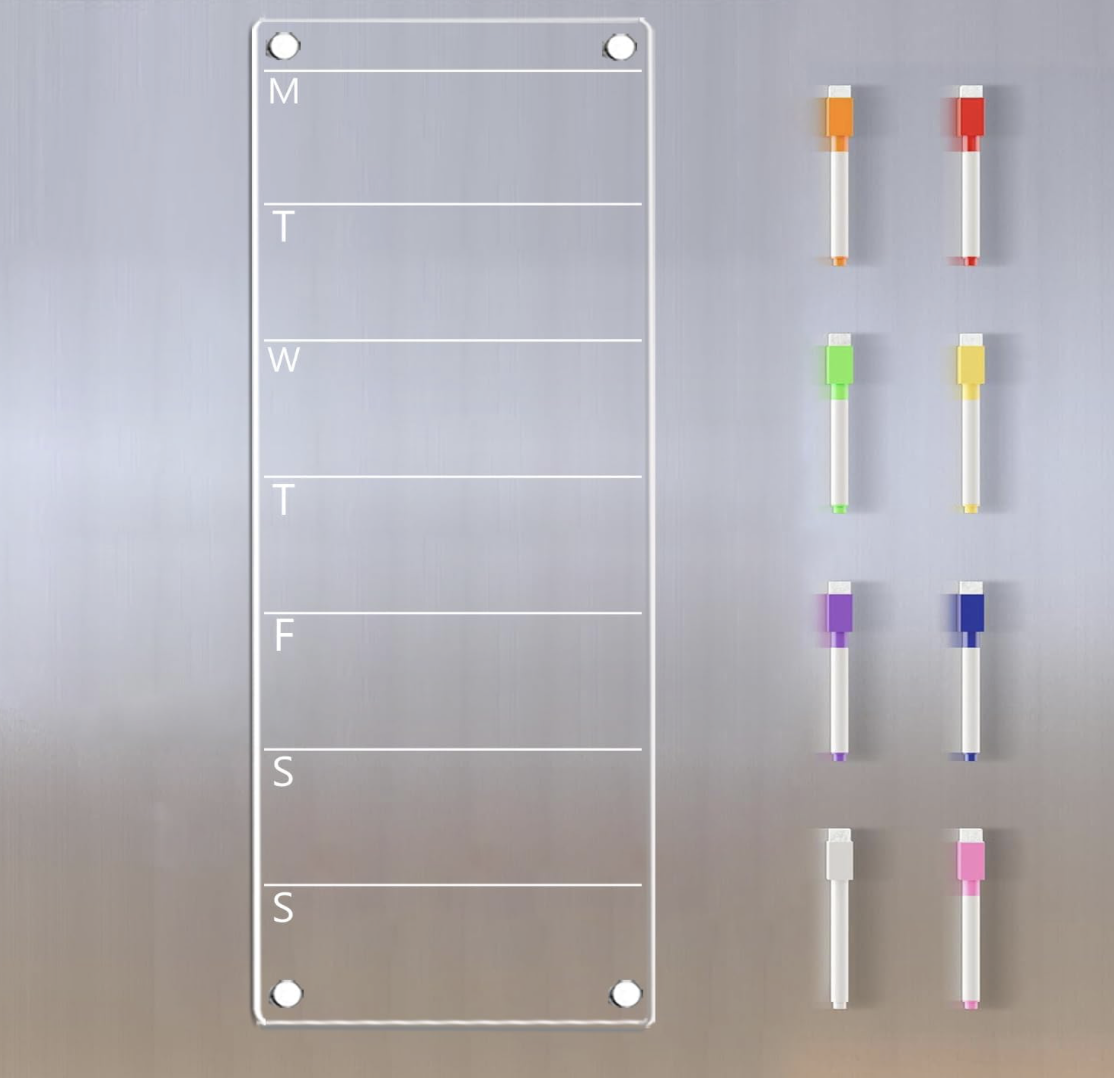
Click to Buy: Magnetic Menu Board for Fridge
Organizing the pantry, refrigerator, and freezer made finding ingredients easier, but there was still one missing piece: deciding what to cook each day. Without a clear meal plan, even the most organized kitchen can quickly become overwhelming. That's where a magnetic weekly menu board became an essential part of the system.
Mounted directly on the refrigerator, the menu serves as a simple visual reminder of the family's themed dinner schedule for the week. Rather than wondering what's for dinner every evening or trying to remember which ingredients were purchased for which meals, the plan is always visible. It creates a direct connection between grocery shopping, meal preparation, and daily decision-making.
One of the greatest benefits of a visible menu is the reduction in decision fatigue. Research consistently shows that the more decisions we make throughout the day, the more mentally exhausted we become. Dinner is often one of the last major decisions families make after a full day of work, school, and responsibilities. By making that decision once during the Sunday Reset instead of every evening, the entire week becomes more predictable and less stressful.
The menu board also creates accountability. It serves as a gentle reminder to use the ingredients that were intentionally purchased, helping reduce forgotten food and unnecessary grocery trips. Instead of relying on memory, the system becomes external, allowing the kitchen itself to support the routines happening within it.
Like every product featured in Little Luxuries, the magnetic weekly menu isn't valuable simply because it's another organizational tool. It's valuable because it reinforces a thoughtful system that helps everyday life feel calmer, more intentional, and easier to manage.
Why This System Works
Most kitchens are organized based on categories:
Snacks go here.
Canned goods go there.
Condiments belong on a certain shelf.
While that approach makes sense from a storage perspective, it doesn't always align with how we actually use our kitchens. We don't cook categories. We cook meals. The disconnect between how food is stored and how food is prepared creates unnecessary friction. When ingredients for the same meals are scattered throughout different areas of the kitchen, grocery shopping becomes harder, meal planning takes longer, and cooking requires more effort. The solution isn't simply adding more containers or creating a picture-perfect pantry. The solution is designing a system around the patterns of your actual life.
For the Founder & CEO of The Life Experience Collective, Kyndra, this meant reorganizing the kitchen around the family's weekly dinner rhythm. By creating designated meal zones for the meals they regularly prepare, ingredients became easier to find, grocery lists became easier to create, and duplicate purchases became less common.
This simple shift transformed the kitchen from a place where food was stored into a system that actively supported the family's lifestyle. Because organization isn't about creating spaces that look beautiful for a moment. It's about creating environments that function beautifully every day.
Want More Than Pantry Organization?
One of the biggest lessons discovered through Sunday Resets is that most people don't need more motivation—they need better systems.
Organization is rarely about the products themselves. The containers, labels, and tools are simply the visible pieces. The real transformation comes from understanding how your life works and creating systems that reduce friction, protect your time, and make everyday responsibilities easier to manage.
That philosophy is at the center of The Life Experience Collective.
If you're looking for accountability, encouragement, and a community committed to intentional living, Experience Maker Society was created to help you build sustainable systems for everyday life. Inside the membership, members participate in weekly Sunday Resets, exchange practical ideas throughout the week, discuss podcast episodes, celebrate progress, and support one another as they create lifestyles that feel more aligned and manageable.
For those who need more personalized support, Lifestyle Management Consulting provides individualized guidance to identify areas of friction and create practical systems around your home, schedule, priorities, and goals. Instead of adopting someone else's routine, you'll build solutions designed specifically for the way you live.
And for those who need more hands-on support, Private Client Coordination offers a done-for-you lifestyle management experience designed for busy professionals, entrepreneurs, and families who want support coordinating the details behind the scenes. The goal is to create more space, clarity, and ease by helping manage the moving pieces that often make everyday life feel overwhelming.
No matter where you are in your journey, intentional living begins with creating systems that support the life you want to experience.
The Little Luxury
This week's Sunday Reset revealed an important reminder: meaningful change doesn't always come from making major life adjustments. Sometimes, it begins with something as simple as reorganizing the way your kitchen works.
By creating dedicated meal zones throughout the pantry, refrigerator, and freezer, a once-frustrating routine became a smoother experience. Grocery shopping became more efficient. Meal planning became simpler. Preparing dinner became less stressful. And that is the heart of Little Luxuries.
This editorial space isn't about chasing perfection or creating a home that only looks beautiful in photographs. It's about discovering thoughtful products, practical systems, and intentional upgrades that quietly improve the way we experience everyday life. Because the greatest luxury isn't always something new. Sometimes, it's creating a life that finally works with you.
This post contains affiliate links. As an Amazon Associate, I may earn a small commission from qualifying purchases at no additional cost to you. I only recommend products I genuinely use or would confidently recommend to help simplify everyday life.